

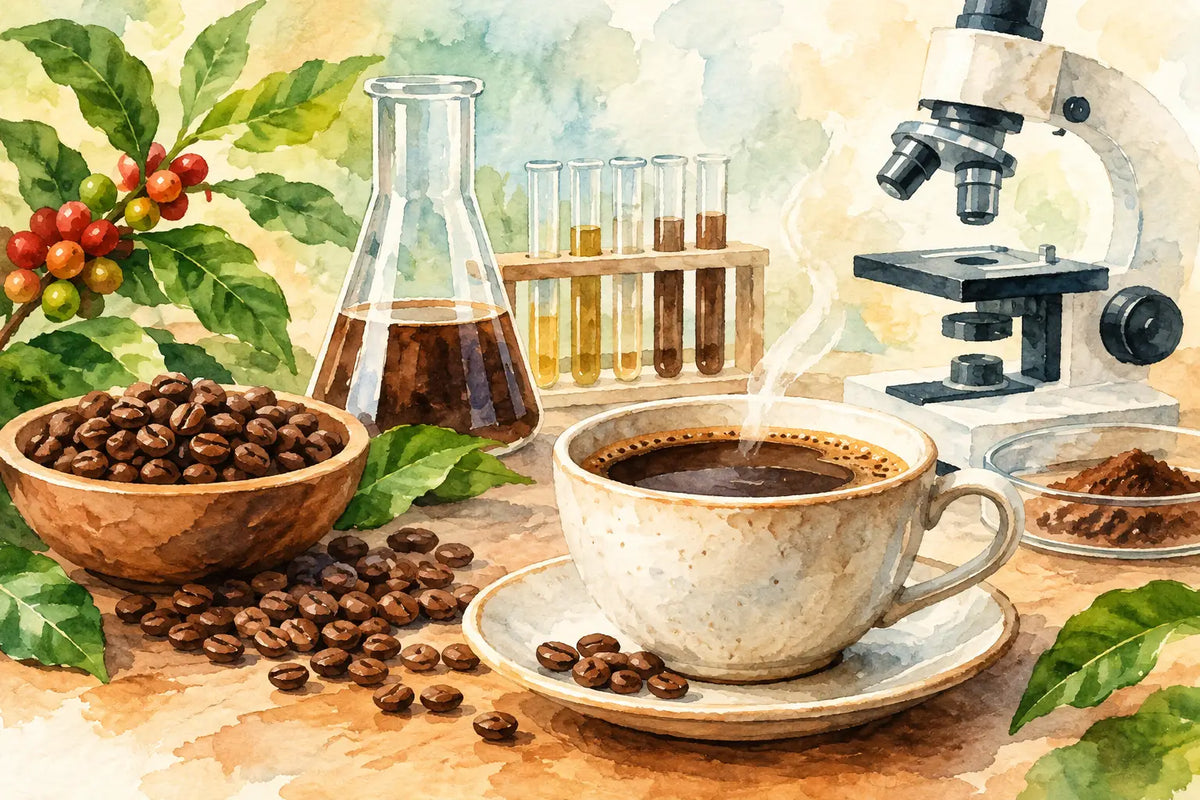
A coffee label can tell you a lot.
But only if the claims behind it actually mean something.
So what does lab tested coffee mean when you are choosing the cup that starts your day?
At its best, it means a coffee company has sent its beans or finished coffee to a qualified laboratory to test for specific compounds or contaminants.
That can give you real peace of mind.
But the phrase lab tested by itself does not tell you enough.
What was tested?
How often?
At what stage?
Was it the green coffee, the roasted coffee, or the finished product?
And what standard did the coffee actually have to meet?
Those details matter.
Especially when coffee is not something you drink occasionally.
For most people, it is every day.
And if something is part of your routine that often, I think it deserves a little more scrutiny than whatever happens to be printed on the front of the bag.
What Lab Tested Coffee Actually Means
Lab tested coffee is coffee that has been analyzed using laboratory methods rather than judged only by taste, appearance, or a supplier telling you everything is fine.
A company might test green coffee before roasting.
It might test roasted coffee after production.
It might test finished ready-to-drink coffee.
Or it may use some combination of those stages.
The point is to verify a defined quality standard.
Depending on the brand, that testing might look for mycotoxins, mold and yeast indicators, pesticide residues, glyphosate, heavy metals, microbiological contaminants, moisture, acidity, antioxidant levels, or other quality markers.
Coffee is an agricultural product with a long journey before it reaches you.
It is grown outdoors.
Picked.
Processed.
Dried.
Stored.
Transported.
Roasted.
Packaged.
Shipped again.
There are a lot of opportunities throughout that process for quality to be protected.
There are also opportunities for it to be compromised.
Testing gives you a way to look beyond the package and actually measure what is present in a sample.
That is what makes it useful.
But there is one thing worth understanding.
Lab tested is not a universal certification.
There is no single test called the “lab tested coffee test.”
The phrase only means something when the company can tell you what it tested for, what methods were used, what standards were applied, and how consistently testing happens.
For us, this is exactly why testing became such a central part of Seek.
If we can measure something, we would rather verify it than assume.
What Does Lab Tested Coffee Mean for Your Health Priorities?
For most people, this should not be about turning coffee into another thing to worry about.
It should be about making a more informed decision.
If you are already navigating mold sensitivity, choosing organic foods, avoiding glyphosate, or paying closer attention to digestion, coffee may be one of the most consistent products in your routine.
That is what makes it worth paying attention to.
Laboratory testing can identify things you cannot see, smell, or taste.
A coffee can taste great and still tell you very little about how it was grown, stored, processed, or tested.
Likewise, a coffee backed by meaningful testing gives you more than a nice story.
It gives you another layer of information.
That does not mean every uncomfortable response to coffee has something to do with contaminants.
There are plenty of other variables.
Caffeine.
Brewing strength.
Roast profile.
How much sleep you got.
Whether you drank it on an empty stomach.
Stress.
Coffee's natural acids.
What you added to the cup.
Testing is one part of the larger picture.
The strongest standard pairs laboratory verification with intentional sourcing, organic growing practices, responsible handling, and coffee that is actually enjoyable to drink.
If that is the kind of standard you are looking for, you can see how we approach it in Seek’s regular coffee, from organic sourcing to third-party testing.
The Tests That Matter Most
Not every test answers the same question.
That is why a company saying “our coffee is lab tested” should be the beginning of the conversation, not the end.
If testing matters to you, look for clarity around what the company actually screens for.
Mycotoxins
Mycotoxins are compounds that can be produced by certain molds under specific environmental conditions.
They can be a concern in agricultural products when drying, moisture, and storage are not carefully controlled.
Coffee testing may look for specific mycotoxins, including ochratoxin A.
What matters is that the brand is clear about what it is testing for.
We do not think companies should imply that every coffee contains dangerous levels of mycotoxins.
And we do not think a company should use the phrase mold free without something meaningful behind the claim.
The better standard is simple.
If you are talking about mycotoxins, test for them.
Mold and Microbial Quality
“Mold” gets used as a broad consumer term.
Laboratories tend to be more specific.
Depending on the testing method, a lab may look at mold and yeast counts, microbial activity, or other quality indicators.
Again, the goal is not to scare people about coffee.
It is to verify that drying, handling, storage, and production have been taken seriously.
For someone already paying close attention to environmental mold exposure, that added diligence may matter.
And even if mold sensitivity is not something you think about, careful handling is simply part of making better coffee.
Pesticides and Glyphosate
Organic certification and residue testing are related, but they are not the same thing.
Organic coffee is grown under standards that restrict many synthetic pesticides and herbicides.
Laboratory testing looks at the actual sample for selected chemical residues.
That distinction matters.
Glyphosate is one of the things people increasingly ask about when looking for cleaner food and beverages.
If glyphosate matters to you, look for a company that identifies it specifically rather than relying on a broad statement about purity.
That is how we prefer to think about coffee.
Specific claims.
Specific tests.
Specific standards.
Not one vague “clean” badge that is supposed to answer everything.
Acidity and Other Quality Markers
Acidity in coffee is not automatically a bad thing.
Some of the best coffees in the world have beautiful acidity.
It creates brightness, structure, and complexity.
But highly acidic coffee can feel harsh for some people, especially those dealing with reflux or sensitive stomachs.
That is where low-acid coffee may be useful.
Bean selection matters.
Roasting matters.
Brewing matters.
And laboratory measurements can help a company understand the finished product instead of relying only on taste.
Some brands also test antioxidant levels or other naturally occurring compounds in coffee.
Those measurements can be useful, but they should not be turned into exaggerated health promises.
Coffee is still coffee.
The point is to understand it better.
Why Transparency Matters More Than the Claim
This is where the words “lab tested coffee” can become misleading if a brand is not specific.
One company might test every production batch against a defined panel of contaminants.
Another might have tested one sample years ago.
Another might test only the green coffee before roasting.
All three can technically say “lab tested.”
Those are very different standards.
Testing has limitations too.
Laboratories analyze samples.
They do not individually test every coffee bean.
Results reflect the sample submitted and the analytical method that was used.
A responsible coffee company understands that.
Testing should be part of the quality system, not the entire quality system.
It should sit alongside sourcing, processing, storage, roasting, packaging, and handling.
If you are comparing coffee brands, there are a few useful questions to ask:
- What specific contaminants or quality markers are tested?
- Is the testing done on green coffee, roasted coffee, finished products, or a combination?
- How often does testing happen?
- What standard does the coffee need to meet before it is sold?
You just need a company willing to answer basic questions clearly.
That is the part I think matters most.
The more complicated the supply chain gets, the more valuable transparency becomes.
Lab Tested Does Not Automatically Mean Better Coffee
Testing matters.
But testing alone does not make great coffee.
A coffee could be laboratory tested and still taste terrible.
It could be overly acidic.
Poorly roasted.
Stale.
Or sourced in a way you do not feel good about.
The same is true of organic certification.
Organic is a meaningful standard, but organic alone does not tell you whether the finished coffee was tested for mycotoxins, glyphosate, heavy metals, or other residues.
We think the better standard is layered.
It starts with good coffee.
High-quality sourcing.
Thoughtful farming practices.
Proper harvesting and drying.
Careful storage.
Responsible transport.
Then testing adds another layer of verification.
After that, the coffee still needs to be roasted in a way that actually tastes good.
That part cannot get lost.
We never wanted Seek to become a coffee you drink because you feel like you should.
It should still be the coffee you look forward to.
That is the difference between a company that simply puts a claim on the bag and one built around clean daily performance.
If you want to try that standard for yourself, start with Seek’s regular coffee. It is the most straightforward expression of what we set out to build: organic coffee, thoughtful sourcing, real testing, and a cup that still tastes like great coffee.
Choosing Coffee You Can Feel Good About
Your coffee should support the life you are building.
It should not leave you second-guessing a ritual you enjoy every morning.
Seek® was built around that idea.
We start with certified organic coffee.
We test for mold, mycotoxins, pesticides, heavy metals, and other potential contaminants.
We think about acidity.
We think about how the coffee is sourced.
And we care just as much about whether it tastes great.
Because if the coffee is something you drink every day, the standard should work in the real world.
Some people care most about organic certification.
Others are specifically looking for mold-tested coffee.
Some want espresso.
Some need decaf.
Some want ready-to-drink iced coffee they can grab out of the fridge.
Those preferences can change.
The underlying standard should not.
Look for a brand that can tell you what it tests, why it tests, and what it does before the coffee ever reaches the laboratory.
Because the best version of lab testing is not about creating more anxiety around your coffee.
It is about removing uncertainty.
You should be able to make your cup, drink it, and move on with your day.
That was always the goal for us.
Know more about the coffee.
Think less about the coffee.
Then put your attention back where it belongs.
If that sounds like what you want from your daily cup, try Seek’s regular coffee here.


