

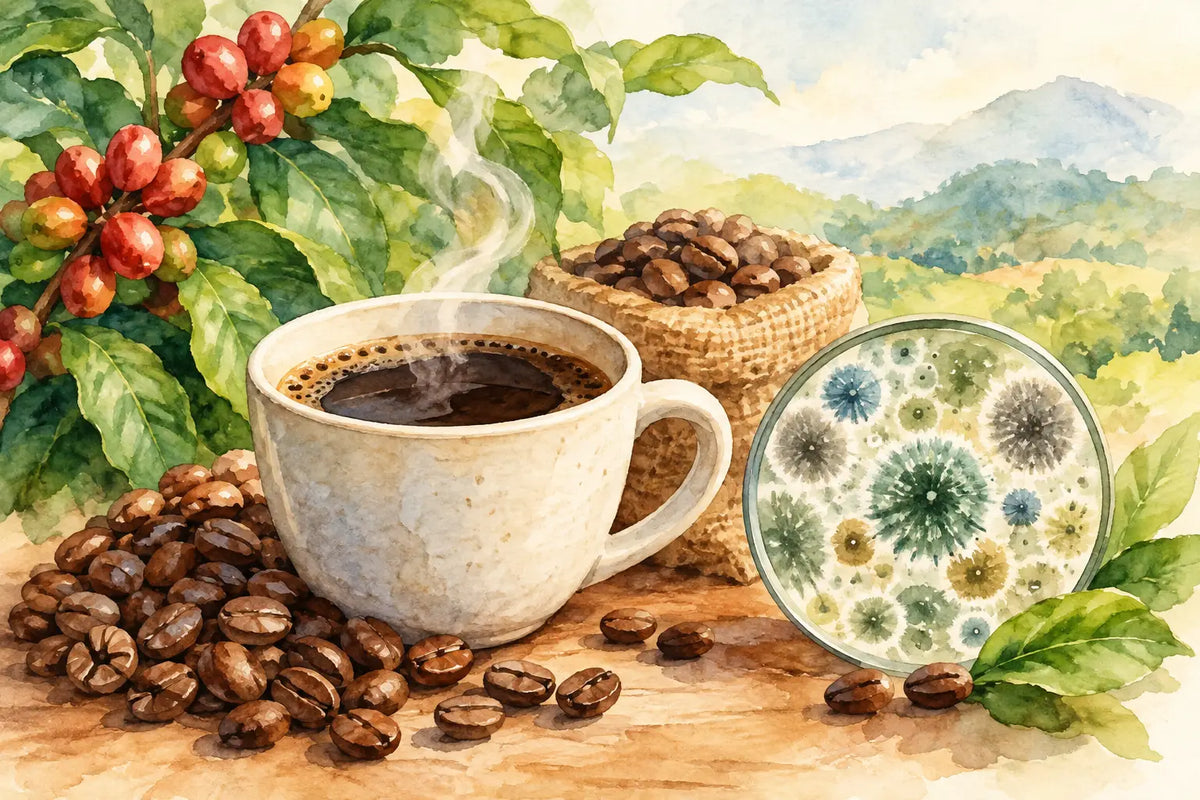
A coffee bag can carry an organic seal and still leave an important question unanswered: is organic coffee mold free? Organic farming is a meaningful standard for how coffee is grown, but it is not a blanket guarantee that every bean is free from mold-related compounds. For people who choose coffee with their focus, digestion, and long-term wellness in mind, that distinction matters.
The better standard is not choosing between organic coffee and tested coffee. It is looking for both. Organic certification addresses agricultural inputs. Thoughtful sourcing, handling, and laboratory testing address the quality of the finished coffee in your cup.
Is Organic Coffee Mold Free by Default?
No. Organic coffee is not automatically mold-free simply because it is certified organic.
Organic certification generally means coffee was grown and processed under standards that restrict or prohibit many synthetic pesticides, herbicides, and fertilizers. That is a valuable part of a cleaner coffee ritual. It can reduce exposure to certain agricultural chemicals and supports farming practices with defined oversight.
But mold is a separate issue. Coffee is an agricultural crop that moves through several stages before it reaches your kitchen: harvesting, processing, drying, storage, shipping, roasting, and packaging. Moisture management during those stages is central to quality. If green coffee is exposed to excess moisture or poorly controlled storage conditions, mold can develop. Under certain conditions, molds may produce mycotoxins, which are naturally occurring compounds that require their own testing and quality controls.
An organic label cannot tell you how carefully a coffee was dried, how long it sat in storage, or whether it was tested for mold and mycotoxins. It also does not confirm screening for glyphosate, since organic certification and finished-product testing are different forms of assurance.
Why Mold and Mycotoxin Testing Matter
“Mold-free” is often used as a simple consumer phrase, but the science behind it deserves precision. Mold and mycotoxins are not interchangeable. Mold is a type of fungus. Mycotoxins are compounds that certain molds can produce in particular growing or storage conditions.
A quality-focused coffee company should take prevention seriously long before testing begins. That means selecting reputable producers, monitoring harvest and post-harvest practices, using appropriate drying methods, and protecting green coffee from humidity during transport and storage. Roasting is an essential quality step, but it should not be treated as the sole solution to a preventable supply-chain problem.
Then comes verification. Laboratory testing provides a measurable layer of accountability for coffee that makes cleanliness a central promise. Testing can be used to screen for mycotoxins and other contaminants, while quality protocols help identify lots that do not meet a brand’s standards.
For consumers, the takeaway is straightforward: a broad claim without evidence asks you to take a leap of faith. A brand that explains its standards and tests its coffee gives you a stronger basis for trust.
A note on absolute claims
No food brand should use health language carelessly. Laboratory methods have reporting limits, and a responsible “mold-free” claim should be grounded in a defined testing program and clear quality thresholds, not fear-based marketing. Coffee is meant to be a daily source of enjoyment and energy, not another source of uncertainty.
That is why transparency is more meaningful than vague reassurance. Ask what is tested, how often testing occurs, and whether the brand treats contaminant control as a core sourcing standard rather than an occasional promotion.
Organic Coffee Still Has Real Value
The fact that organic does not automatically mean mold-free does not make organic coffee less worthwhile. It means the label should be understood for what it does well.
Certified organic coffee helps address the farming side of the equation. For people working to limit exposure to synthetic pesticide residues and herbicides, it can be an aligned choice. It also reflects a supply chain built around specific agricultural standards, which is often an important part of buying with intention.
Still, wellness-minded coffee drinkers often want more than a single certification. They may also care about mycotoxin screening, glyphosate testing, acidity, roast quality, freshness, and how the coffee feels on an empty stomach. Those priorities are not excessive. They reflect a simple truth: coffee is one of the most repeated rituals in many people’s lives.
A cup you drink every morning deserves the same discernment you bring to the rest of your nutrition routine.
What to Look for in Cleaner Coffee
Start with organic certification, then look beyond it. The strongest brands communicate their quality approach in plain language and make it clear that clean coffee is not an afterthought.
Look for specific statements about laboratory testing for mold and mycotoxins. It is also reasonable to seek coffee screened for glyphosate, especially if that is part of your personal clean-label standard. Details matter more than flashy packaging. If a brand says its coffee is “clean” but cannot explain what that means, the claim has limited value.
Consider acidity, too. Acidity is not a contaminant, and bright acidity can be a desirable flavor characteristic in specialty coffee. But some people find highly acidic coffee harsh, especially when they drink it black, before breakfast, or more than once a day. A low-acid option may offer a smoother experience for sensitive stomachs without asking you to give up the ritual.
Finally, pay attention to freshness and storage at home. Even carefully sourced, tested coffee benefits from good handling. Keep beans or grounds in a cool, dry place in an airtight container. Avoid storing coffee in a humid area beside the stove, and only buy the amount you can enjoy while it is fresh. Refrigeration is usually unnecessary and can introduce moisture and odor exposure when containers are opened repeatedly.
The Trade-Off: Certification Alone vs. Verified Standards
Organic coffee can be an excellent choice when your primary concern is how the crop was grown. For many households, it is a meaningful upgrade from conventional coffee.
If you are especially sensitive to mold exposure, managing digestive discomfort, or simply looking for more peace of mind around a daily habit, certification alone may not feel complete. You may prefer a coffee that pairs organic sourcing with documented screening for mold, mycotoxins, and glyphosate.
That level of care may cost more than commodity coffee. Testing, careful lot selection, and quality-focused sourcing are not interchangeable with the lowest possible price. But for a ritual that supports your morning focus, training session, workday, or time with family, the value is not limited to the bean itself. It is the confidence behind the cup.
Seek® was created around that conviction: coffee should support how you want to feel, with certified organic sourcing, contaminant-conscious standards, and laboratory-tested quality at the center of the experience.
A Better Question to Ask Before Your Next Cup
Instead of asking only whether coffee is organic, ask whether the brand has earned your trust across the full journey from farm to cup. Organic certification is a strong first signal. Careful sourcing, responsible moisture control, and transparent laboratory testing build on it.
Choose coffee that lets you focus on what matters after the first sip. Your daily cup should feel like a considered ritual - smooth, enjoyable, and supported by standards you can believe in.


